Alexander Ravskyi
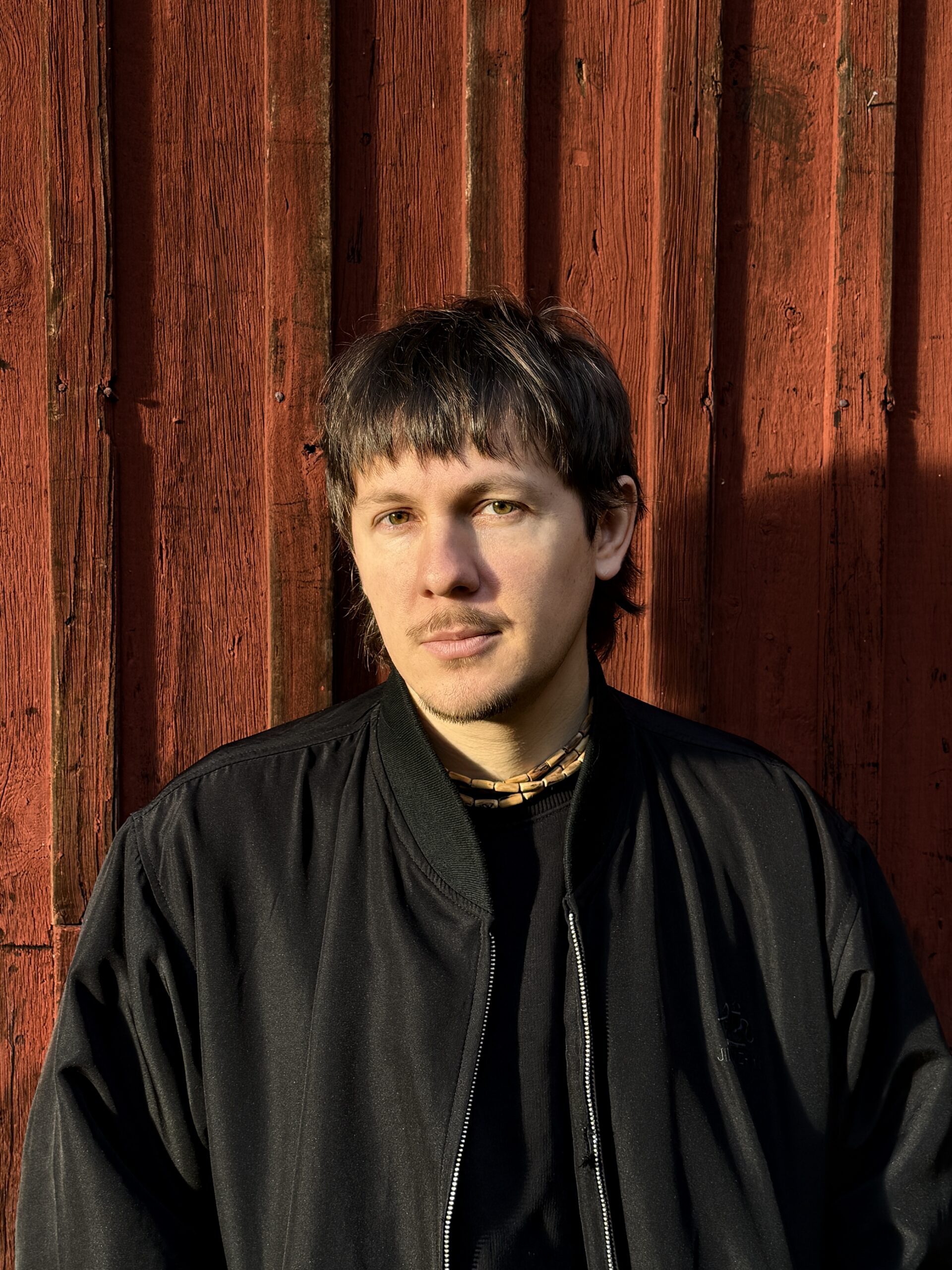
What is democracy for you?
Art is a phenomenon older and more universal than democracy. It has existed under various forms of governance, from pure service to the sacred to subjugation under perverted theocratic or atheistic systems. Although democracy is not a prerequisite for art, it radically changes its content and function, turning it into a space for open dialogue, collective reflection on reality, and new ways of seeing the world.
In this context, one can refer to the Vedic principle “Desha, Kala, Patra,” which states that it is always necessary to consider “place, time, and circumstances.” This means acting adaptively, appropriately, timely, and harmoniously. I believe this principle is applicable to the discussion of the importance of democracy today. Forms of governance cannot be evaluated outside their historical context. What was suitable and effective in the past may lose its adequacy in the present. Following this principle, democracy, with all its imperfections, today proves to be the most proportionate form of coexistence for complex, diverse societies.
For me, democracy is a way of coexisting based on acknowledging the multiplicity of perspectives, experiences, and voices — including those that do not align with the dominant norm; on the willingness to listen to others, and to defend the right of minorities to exist and speak.
What would a city or a society be without art?
Beyond history, our present time also offers numerous examples of entire countries where art is placed under partial or complete prohibition. Under such conditions, cultural degradation occurs: social development is hindered, fear intensifies, and civic consciousness weakens. Art and culture constitute a vital force of democracy, fostering critical thinking, defending diversity, and sustaining open dialogue.
Art builds community by enabling imagination, empathy, and new perspectives. Do you see yourself in this context?
Through my art, I come to know the world and myself, creating a space where different thoughts, emotions, and ideas can meet. For me, it is a way of understanding my sur-roundings and sharing my experience with others. As for the viewer’sresponse, it always remains free and unpredictable.
A healthy nature and cyclical thinking are fundamental for human well-being and democracy. How does your art reflect this?
In my works, I strive to express a sense of love for life and admiration for the beauty of this world, while also revealing the interconnectedness of everything around: people, nature, and time. This allows one to feel both responsibility and the value of each moment.
Do you think artists and poets can help people imagine alternative worlds?
Absolutely, yes. I am someone who learns from other artists and poets alternative ways of seeing the world. Through this, people begin to perceive new possibilities, to notice what once seemed impossible, and to imagine a different order of things.
Art does not dictate solutions, it expands our capacity to think and to dream.
About the artist:
Alexander Ravskyi (b. 1992 Odesa, Ukraine) Lives and Works in Södertälje. Educated at Odesa Academy of Building and Architecture 2012 – 2018 Master degree in Fine Arts. Odesa Art College of M.B.Grekov 2008 – 2012. Exhibited at Liljevalchs konsthall, KIN-Museum of Contemporary Art and Kulturhuset Strängnäs